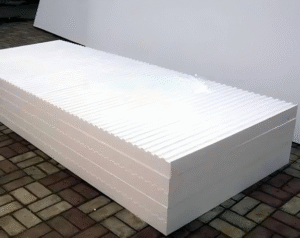
1. Expanded Polystyrene Board (EPS)
Characteristics
Thermal Conductivity: 0.038–0.041 W/(m·K), offering good thermal insulation performance.
Density: 15–30 kg/m³, lightweight and easy to construct.
Water Absorption Rate: ≤ 6%, with moderate moisture resistance.
Fire Resistance Rating: Class B1 or B2 (flame-retardant type), requiring the addition of flame retardants.
Thickness: Commonly 50–100 mm.
Advantages
Excellent Insulation: Low thermal conductivity, suitable for both cold and hot regions.
Cost-Effective: Priced at approximately 50–100 CNY per square meter, delivering high cost performance.
Easy Construction: Lightweight and easy to cut, ideal for complex external wall structures.
Wide Application: Suitable for residential buildings, commercial structures and industrial workshops.
Disadvantages
Poor Fire Resistance: Rated Class B1/B2, it is flammable when exposed to open flames, requiring strict construction quality control.
Moderate Durability: Prone to aging upon long-term exposure, with a service life of about 20–30 years.
Low Strength: Limited compressive capacity, vulnerable to external damage.
Application Scenarios
External wall insulation for residential buildings in cold northern regions (e.g., Beijing, Harbin), and general construction projects with limited budgets.
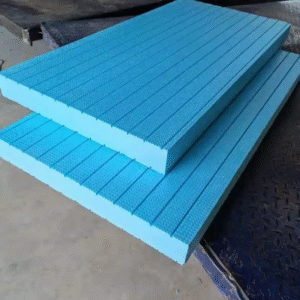
2. Extruded Polystyrene Board (XPS)
Characteristics
Thermal Conductivity: 0.028–0.030 W/(m·K), providing better insulation performance than EPS.
Density: 25–45 kg/m³, with relatively high strength.
Water Absorption Rate: ≤ 1%, featuring excellent waterproof performance.
Fire Resistance Rating: Class B1 or B2, requiring flame-retardant treatment.
Thickness: Commonly 30–80 mm.
Advantages
Superior Insulation Performance: Low thermal conductivity, ideal for buildings in extremely cold regions or those with high energy-saving requirements.
Strong Waterproofness: Low water absorption rate, suitable for humid environments (e.g., coastal areas).
High Compressive Strength: Applicable for ground insulation or load-bearing wall insulation.
Disadvantages
Higher Cost: Priced at approximately 100–200 CNY per square meter, which is more expensive than EPS.
Poor Breathability: May cause moisture accumulation inside the walls, requiring matching ventilation design.
Environmental Concerns: The production process may release freon; eco-friendly products are recommended.
Application Scenarios
Insulation for buildings in extremely cold regions (e.g., Northeast and Northwest China), basement or roof insulation, and external wall insulation in humid coastal areas.
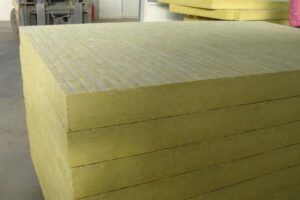
3. Rock Wool Board
Characteristics
Thermal Conductivity: 0.036–0.048 W/(m·K), delivering good thermal insulation performance.
Density: 80–200 kg/m³, relatively heavy in weight.
Water Absorption Rate: ≤ 5%, hydrophobic treatment is required to enhance waterproof performance.
Fire Resistance Rating: Class A (non-combustible), with outstanding fireproof performance.
Thickness: Commonly 50–120 mm.
Advantages
Excellent Fire Resistance: As a Class A non-combustible material, it is suitable for high-rise buildings and places with strict fire protection requirements.
Superior Sound Insulation: Its porous structure absorbs noise effectively, making it ideal for densely populated urban areas.
Eco-friendly and Durable: Non-toxic and boasts a long service life (up to 30–50 years).
Disadvantages
Relatively High Cost: Priced at approximately 150–250 CNY per square meter.
Complex Construction: Its heavy weight requires professional construction, which increases labor costs.
High Water Absorption Tendency: Hydrophobic treatment is a must; otherwise, the insulation performance may be compromised.
Application Scenarios
High-rise buildings (e.g., those over 30 floors), public buildings (e.g., hospitals and schools), and industrial workshops with stringent fire protection standards.
4. Polyurethane Board (PU)
Characteristics
Thermal Conductivity: 0.018–0.024 W/(m·K), offering the best insulation performance among common materials.
Density: 35–50 kg/m³, with a moderate weight.
Water Absorption Rate: ≤ 3%, featuring excellent waterproof performance.
Fire Resistance Rating: Class B1 or B2, requiring flame-retardant treatment.
Thickness: Commonly 30–60 mm.
Advantages
Ultra-high Insulation Performance: Boasts the lowest thermal conductivity, with better insulation effects than EPS and XPS.
Lightweight yet High Strength: High compressive strength, suitable for various wall structures.
Waterproof and Moisture-proof: Low water absorption rate, ideal for humid environments.
Disadvantages
High Cost: Priced at approximately 200–300 CNY per square meter, classifying it as a high-end insulation material.
Moderate Fire Resistance: Requires the addition of flame retardants, with inferior fireproof performance compared to rock wool boards.
Stringent Construction Requirements: Professional spraying or board splicing is needed, which increases construction difficulty.
Application Scenarios
High-end residential buildings, cold storage facilities, ultra-low energy consumption buildings (e.g., passive houses), as well as coastal or extremely cold regions.