
Introduction
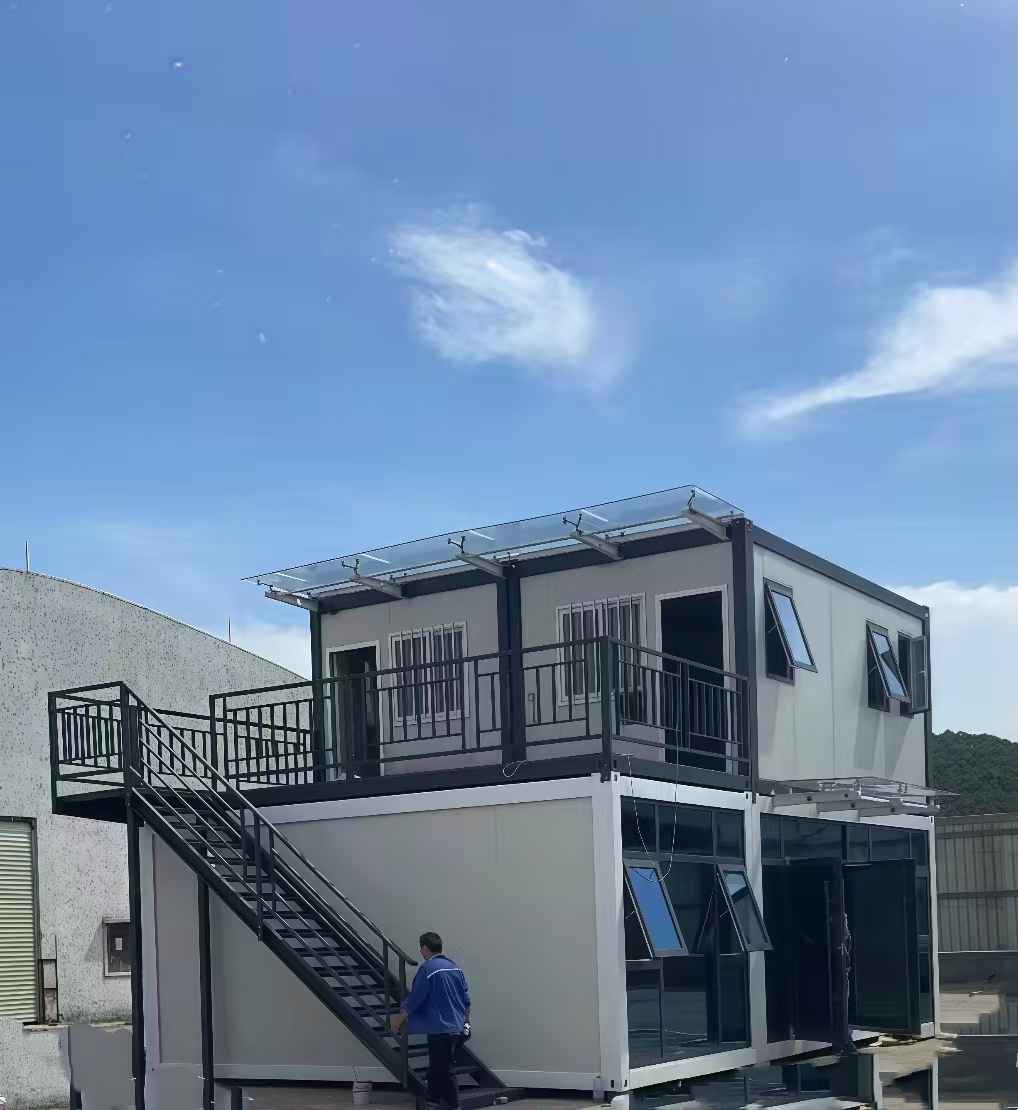
The quick-assembly packaged container house is a popular modular building in recent years. It features a standardized steel structure as its framework, with wall panels, doors, windows, water and electrical pipelines, etc., all prefabricated in factories.
Feature
On-site assembly is done quickly using bolts or clips, and a team of 4 people can assemble 2-3 standard units within 8 hours. Its most prominent feature is that it can be flattened and compressed during transportation, saving over 50% of the transportation space compared to traditional containers.
Application
It is suitable for both temporary and semi-permanent use scenarios, and is widely applied in construction site dormitories, emergency shelters, commercial pop-up stores, etc.
How to choose
When selecting, first clarify the usage scenario: for short-term temporary housing (such as exhibitions, emergencies), lightweight models can be prioritized, with emphasis on assembly efficiency and transportation costs; for long-term use (such as offices, homestays), structural strength should be focused on. Choose products with a wind resistance rating of ≥10 and earthquake resistance of ≥7 degrees. At the same time, check the fire resistance and thermal insulation performance — the enclosure materials must reach Class A non-combustible standards, and the thickness of the insulation layer is recommended to be ≥50mm to ensure good thermal insulation effect.
Secondly, consider the flexibility of configuration. High-quality quick-assembly containers should support modular combination, which can be used independently as a single container, or horizontally spliced into a large space, or vertically stacked into a multi-story building. In addition, detailed designs are crucial: whether the doors and windows are made of broken bridge aluminum (to improve airtightness), whether the floor is anti-slip and wear-resistant, and whether the water and electricity interfaces have reserved expansion space. These will all affect the later use experience.
Finally, compare the cost-effectiveness. Do not only look at the unit price, but consider the comprehensive costs of transportation, installation, and maintenance: choosing durable models that can be disassembled and reassembled more than 5 times will be more cost-effective in the long run.
In conclusion, only by selecting according to the service cycle, environmental requirements, and configuration details can you find the most suitable quick-assembly packaged container house.